About the Course
While making the game, the students in Video Game Programming 2 also learned many useful skills and habits that are used in the professional world. For instance, students start the class with "Stand-Up" where they stand and discuss what they have been working on, what they plan on working on, and any blockers (problems) they are experiencing. Additionally, students keep a Journal documenting what they do during each class. Included in this journal is also a Sprint Retrospective, reflecting on the success/failure of the sprint.
Our Class Journal Tracker (need to add link)
Sample Journal
3/22/2023
Goals: My goal for today is to finish implementing a double jump into my program.
Blockers: I had some trouble finding a good tutorial to use.
Reality: I got the character to be able to double jump, but I was unable to implement animations.
Sample Retrospective
What went well: We did a lot more planning beforehand.
What didn’t go well: I didn’t manage my time, so I didn’t get as much accomplished as I did in other sprints.
What can I do to improve: I will designate time to plan/research and time to work, so I can have a plan but also get things accomplished.
Best Practice: My best practice was planning out the map before designing the level areas, so I know what needs to be done and what needs to be in it.
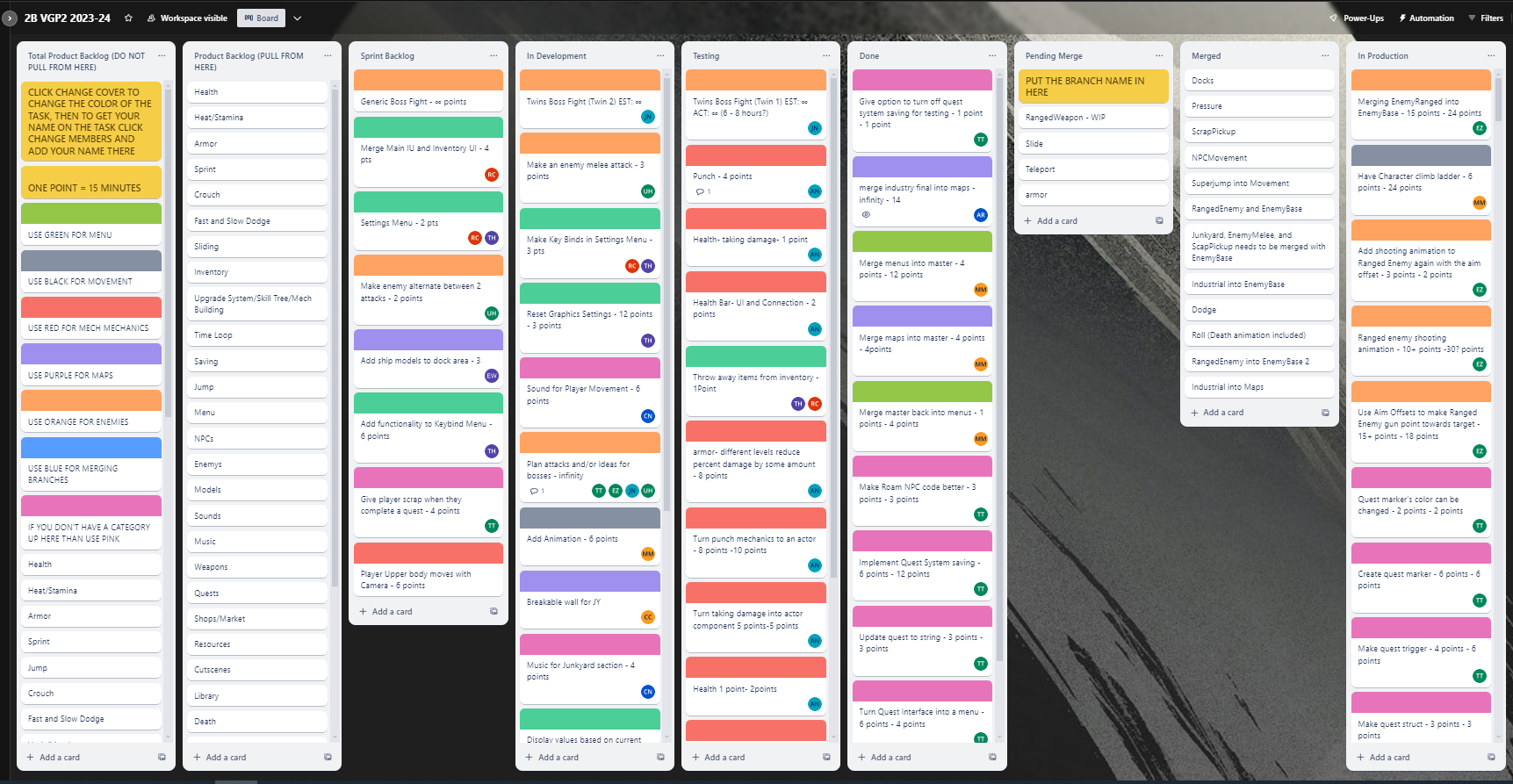
Another tool students use is the Trello Board. The Trello Board has cards representing the tasks they worked on for the sprint, including an estimated amount of "points" the task will take and the actual number of "points" it took. For this class, one point roughly estimates to fifteen minutes. Cards also include who is working on the task and a color label for the category.
As the development of the game progresses, completed tasks are moved into the Done section, and once the sprint is over, the tasks are moved into In Production for documentation purposes.